

Case Study
Helping Vention understand buyers & sharpen its market strategy

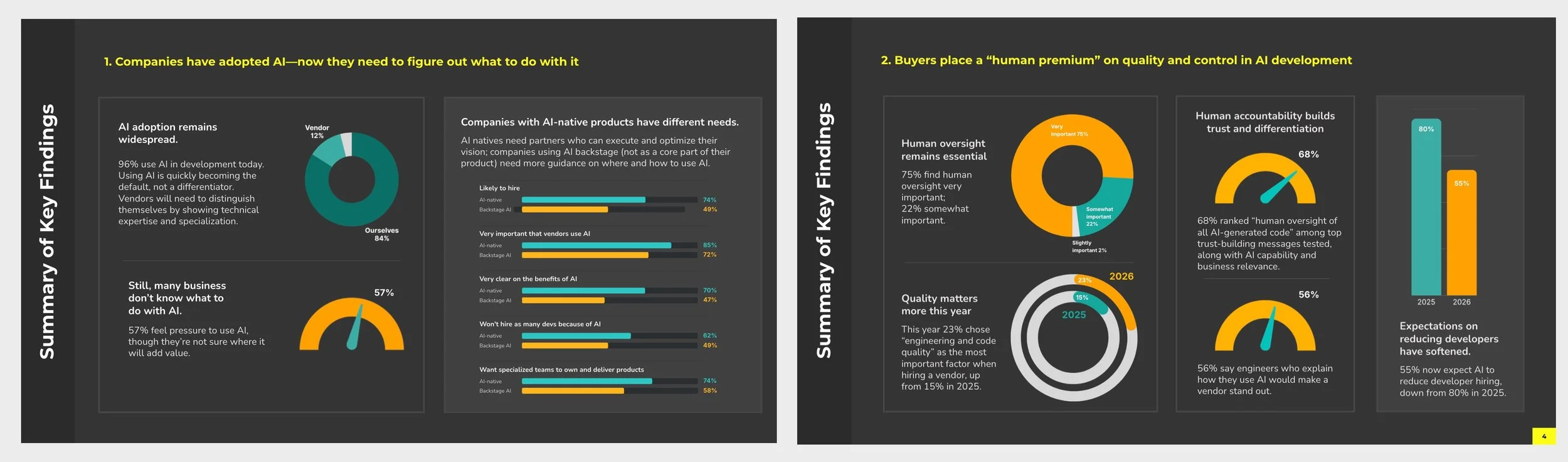
Vention, a leader in custom software development, partnered with Bixa to conduct a comprehensive B2B market research study aimed at understanding what puts a provider on a buyer’s shortlist—and what gives buyers the confidence to move forward.
Through mixed-methods research—including quantitative surveys, in-depth interviews, and video diaries—Bixa delivered actionable insights into audience segmentation, competitive positioning, and lead generation opportunities that shaped Vention’s market strategy.
After this initial benchmarking study, we continued to work with Vention routinely on their brand tracker, tracking awareness, consideration, and other funnel metrics for their brand as well as key competitors over time.
The challenge
Vention needed to look beyond company profiles to understand the B2B customers choosing a software development partner, understanding who to reach and what drives their decisions. The research focused on:
Identifying audience segments and developing detailed buyer personas
Understanding purchase triggers, buying cycles, and decision criteria, including differences between audiences in the US, UK, and DACH region
Exploring how prospects perceive Vention alongside direct and indirect competitors
Finding the channels and messages best suited to each target audience
Our approach
Bixa designed a mixed-methods study to understand both how buyers evaluate providers and how they feel about the choices in front of them. Our approach included:
Buyer conversations: In-depth interviews with decision-makers at high-growth companies, Venture Capitalists, and other hard-to-reach SMB and enterprise audiences to explore their challenges, motivations, and experiences choosing software development vendors
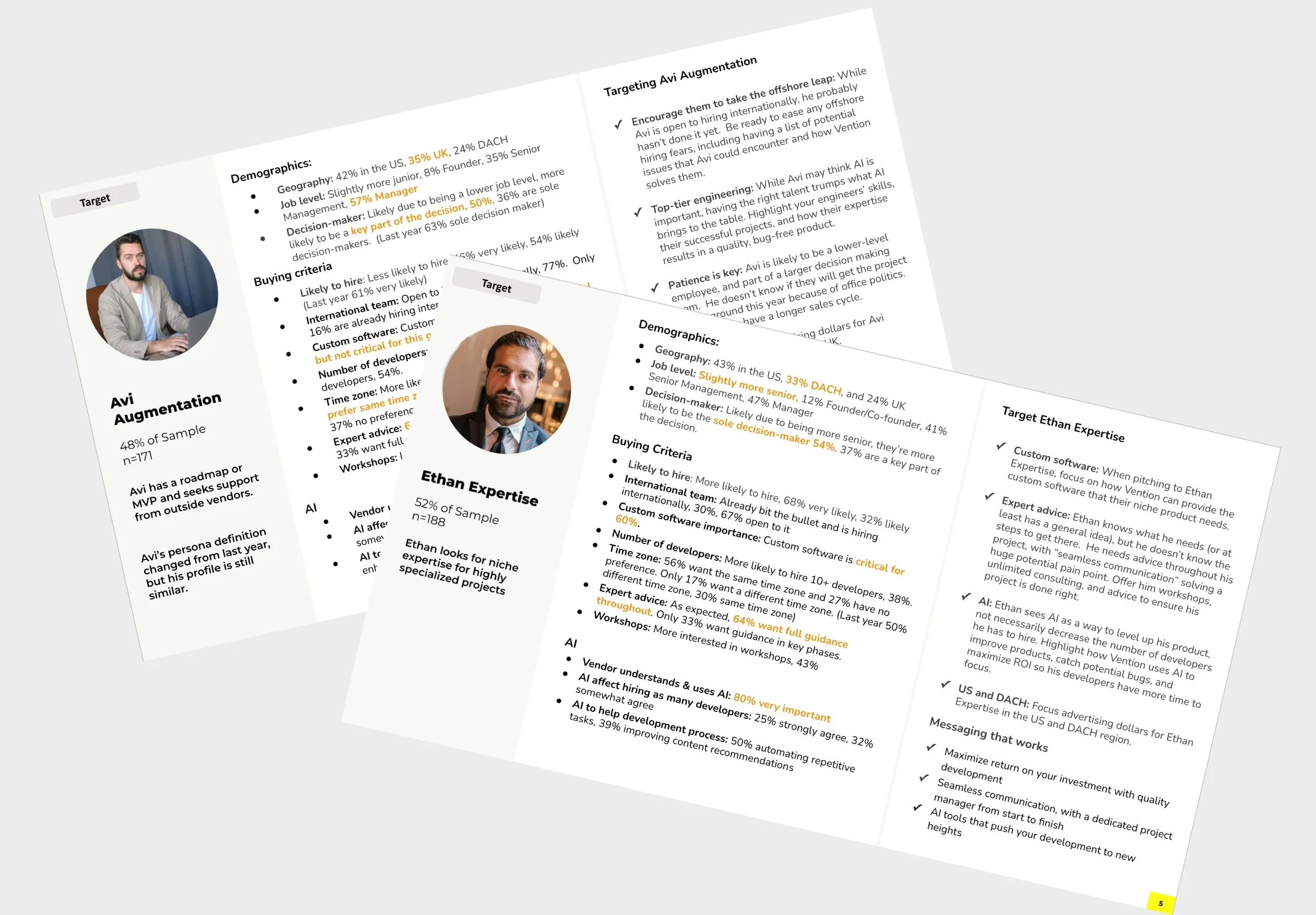
Audience segmentation and buyer personas: Using cluster analysis, we conducted audience segmentation and created genuinely usable personas based on psychographic and behavioral data.
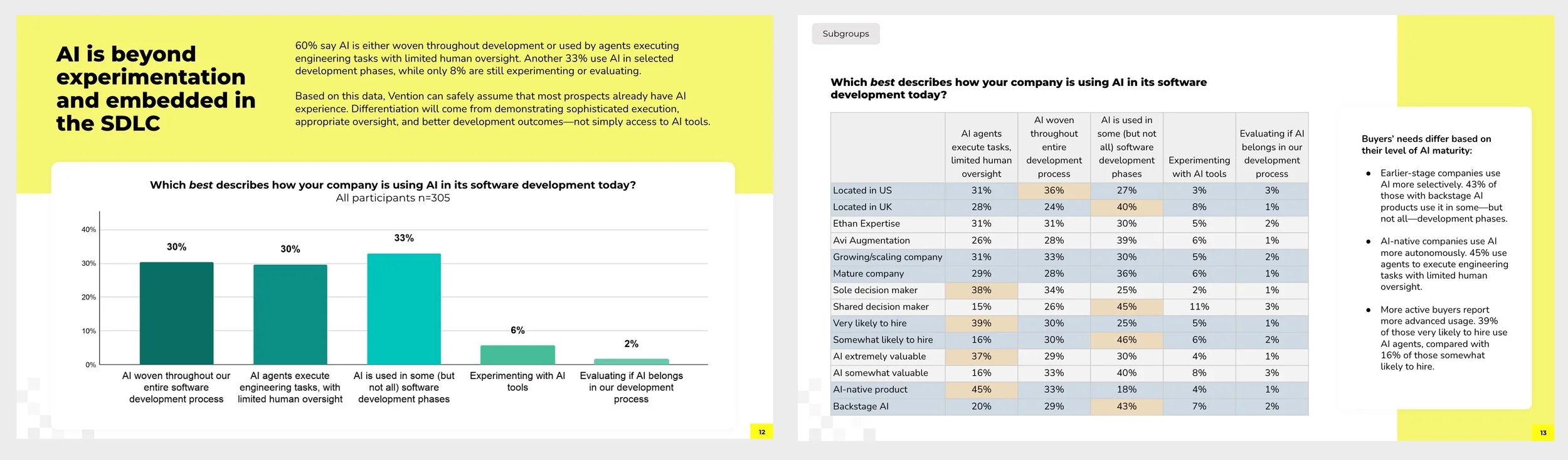
Pattern measurement across each audience: Quantitative surveys examined buying criteria, brand perceptions, and competitive differentiation for each target audience.
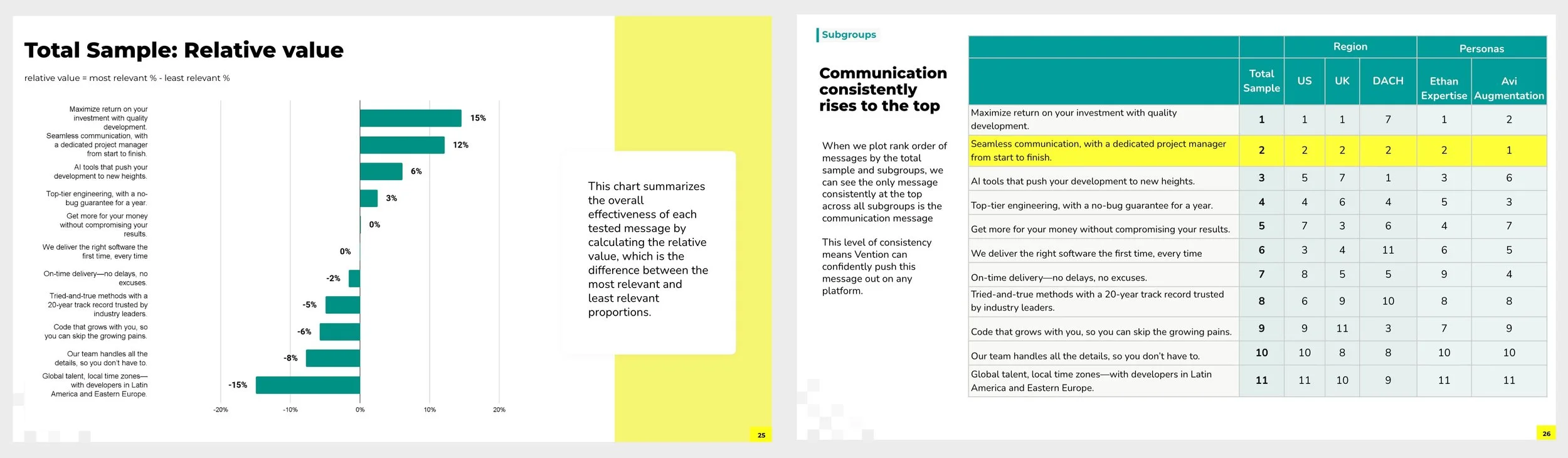
Messaging study: Utilizing MaxDiff, we conducted a messaging study to understand the key messages, promises, and guarantees that move the needle with customers in different persona groups and geographic areas. Video diary studies captured authentic customer reactions to lead gen guarantees and promises to know how to modify them for the future and reach the most qualified prospects.
Competitor perception mapping: We uncovered trust drivers, brand associations, and differentiation opportunities
Brand tracking over time: Repeated studies over the following three years led to tracking of awareness, consideration, perceptions and key differentiators.
What we accomplished
Buyer insights behind Vention’s “peace of mind guarantee”
The research helped shape one of Vention’s key differentiators, a marquee “peace of mind” guarantee. Understanding what buyers needed to feel confident choosing a development partner helped Vention build assurances around their most important concerns.
Optimized targeting and sales messaging
Detailed buyer personas helped Vention prioritize high-value segments and tailor campaigns and sales conversations around each audience’s needs, decision criteria, and objections.
Competitive positioning, informed over time
Repeated studies over the following three years tracked brand awareness, consideration, perceptions, and key differentiators. This gave Vention an ongoing view of its competitive position and evidence to guide which strengths to emphasize as the market evolved.
A peek behind the curtain
Highlighted tools & techniques

Cluster analysis
A statistical model for audience segmentation and persona creation that identifies meaningful groups of customers based on shared behaviors, needs, motivations, or attitudes. This gives you real data to determine who to target (and who not to target) while informing differentiated messaging, products, and go-to-market strategies.
Concept testing
This puts actual concepts for products, features, messaging, campaigns, or design in front of target customers to understand what resonates, compare competing directions, uncover potential problems, and refine the strongest ideas before significant investment is made.
Brand tracking
Uses recurring surveys (typically quarterly or semi-annually) to track how brand awareness, consideration, perceptions, preference, trust, and other key brand metrics change over time. It shows whether your brand and marketing efforts are actually shifting how the market sees you—and where you stand relative to competitors.
More case studies
-
![]()
Let'sGetChecked
Long-term research to identify at-home healthcare opportunities
-
![]()
Google News
Audience segmentation & product recommendations for enhanced engagement
-
![]()
Eko Health
Data-driven product strategy for AI-powered stethoscopes
-
![]()
Cox Communications
Market validation to empower smarter cities




Could you be our next success story?
Book a complimentary 30-minute consultation with a senior researcher at Bixa—never a sales rep.
We’ll discuss your goals and explore how market research can help you accomplish them.
No strings, no commitment. Just clarity.